00Battery energy storage · India | UAE | China
Pai Kane Energy builds battery storage as an engineering discipline: metered data first, dispatch simulation second, hardware last. Seven product families span everything from a 33 kWh jobsite unit to a 5 MWh utility-scale DC block.
JJobsite energy systems
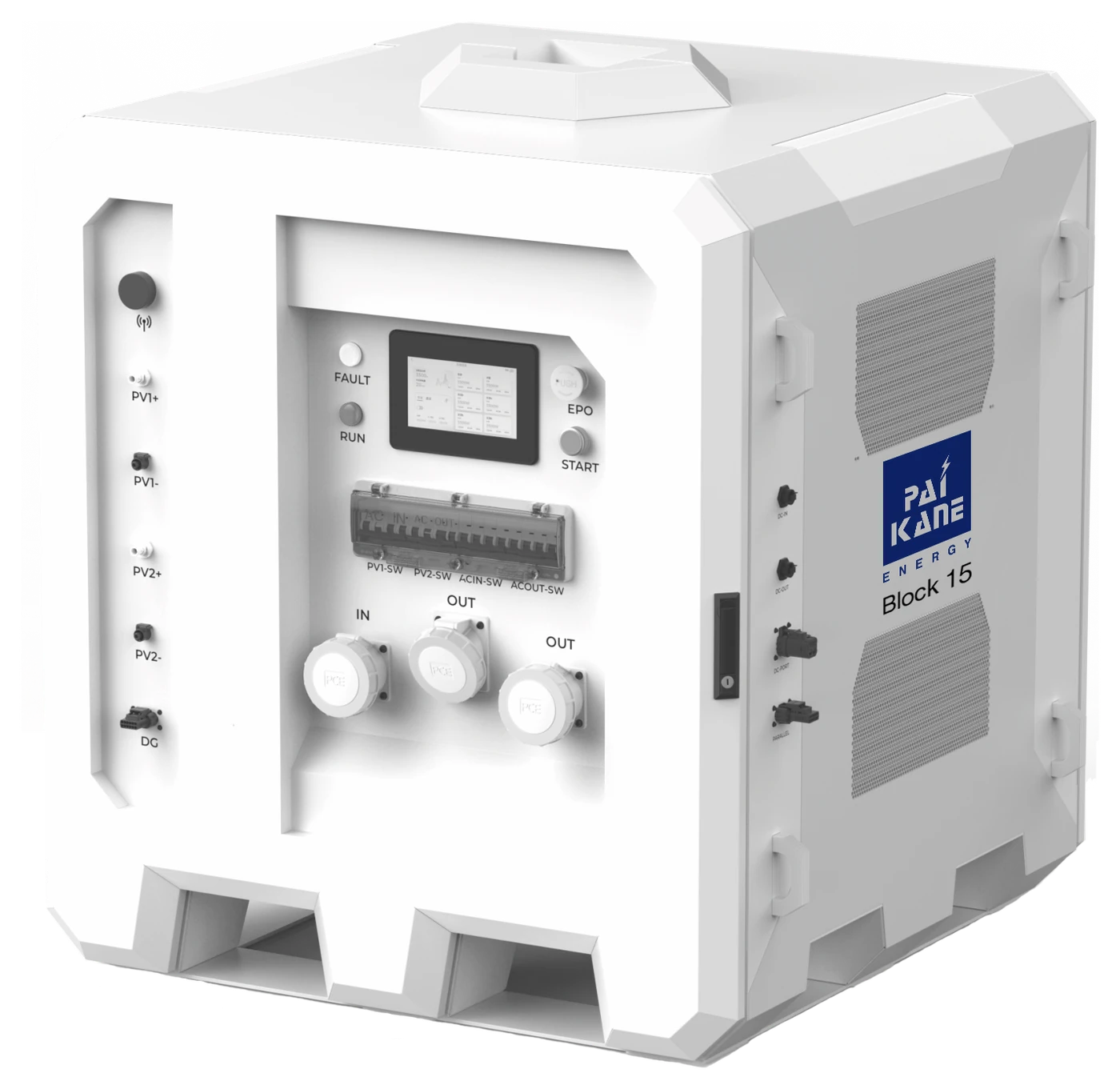
Compact, rugged, jobsite systems follow the work: crane electrification, DG hybridization and silent temporary power.
SStationary energy systems
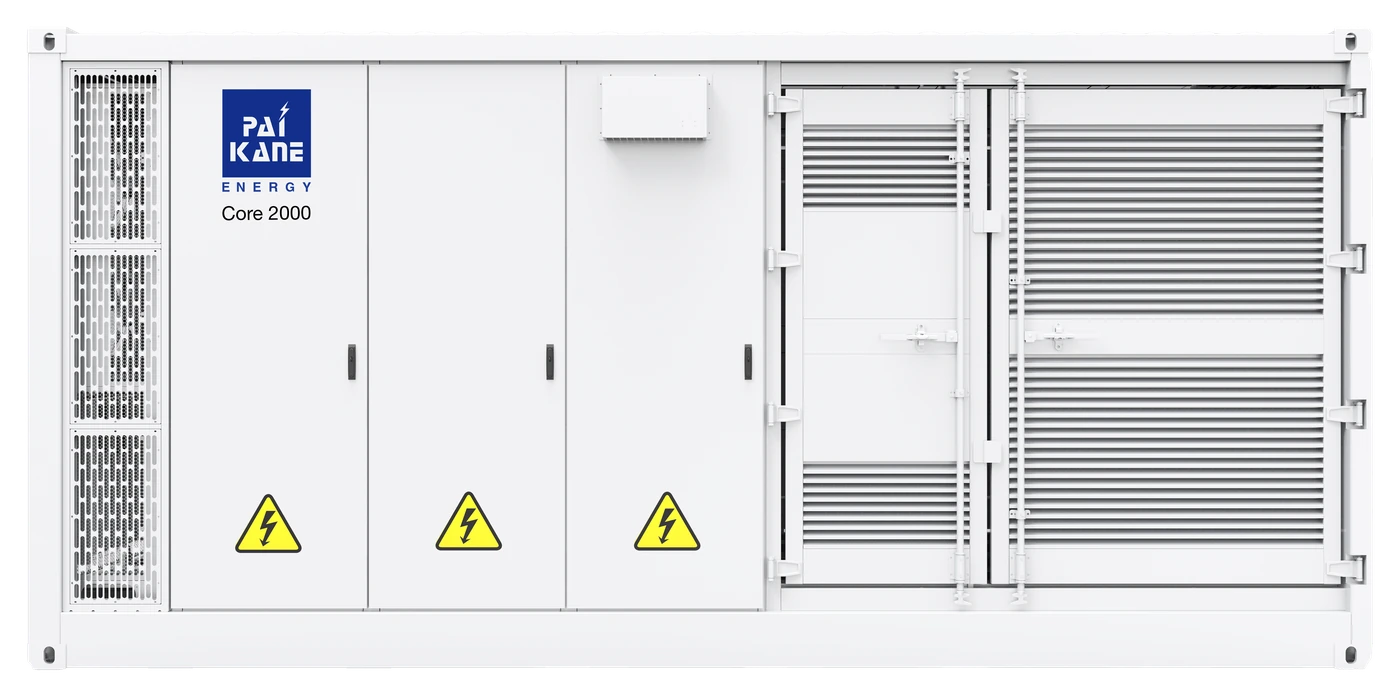
Small cabinets to large containers cover solar shifting, peak shaving, ToD arbitrage, utilities, microgrids and data-center backup.
Most storage is sold by catalog. PKE systems are sized from your meter. Five steps, in order, before a single cabinet is quoted.
We ingest utility settlement and meter data alongside your load records, and reconcile drawal and injection so the model starts from what the meter saw, not what the nameplate claims.
IN: settlement files · interval data · tariff schedule
OUT: a clean, reconciled energy record
The record is assembled into an energy matrix that tells us what was solar consumption, surplus renewable, grid import and the site load in each of the 36,000+ 15-min timeslots over the past year.
OUT: demand and consumption by date + slot · highest recorded demand
Peak amplitude sets the power rating. Peak duration and shape set the energy rating. Coupling them to a catalog SKU too early is how systems end up wrong in both directions.
OUT: kVA and kWh requirements, independent of hardware
The candidate system is run against your real time-of-day tariff: charge windows, discharge windows, round-trip losses, degradation over the horizon.
OUT: dispatch profile · delivered savings per slot · multiple options
Savings become a financial model with payback and IRR. Only once the numbers close is a product family selected: Spike, Power, Core or Vault.
OUT: payback · IRR · recommended family + configuration
Assumes a 30% peak shave and partial DG offset. Treat it as indicative; a dispatch study against your meter data replaces every assumption here.
OUTIndicative annual outcome
These guarantees are available on select models, not a spec across the board — check the individual product page for what applies where.
ASafety
All our stationary BESS over 250 kWh come standard with semi-solid state battery cells, highly resistant to thermal runaway.
BEfficiency
DC–AC round-trip efficiency of up to 88% and peak conversion of 97.8%. These are the numbers your arbitrage model keeps.
CContinuity
On/off-grid transfer fast enough that loads ride through, plus 150% overload for 10 seconds when they misbehave.
DCompliance
IEC 62109/62477, EN 50549, VDE 4105/4110, AS4777, G99/G100, so the connection paperwork closes.
Send twelve months of settlement data and a recent bill. The sizing study comes back with numbers you can put in front of a board.