Products / Jobsite
The Spike series buffers between a comparatively small grid or generator connection and transient loads such as tower cranes and hoists. In suitable duty profiles, the system can be replenished from a small steady input while delivering peak current up to 462 A. Final sizing depends on the equipment electrical schedule and a measured or validated load profile.
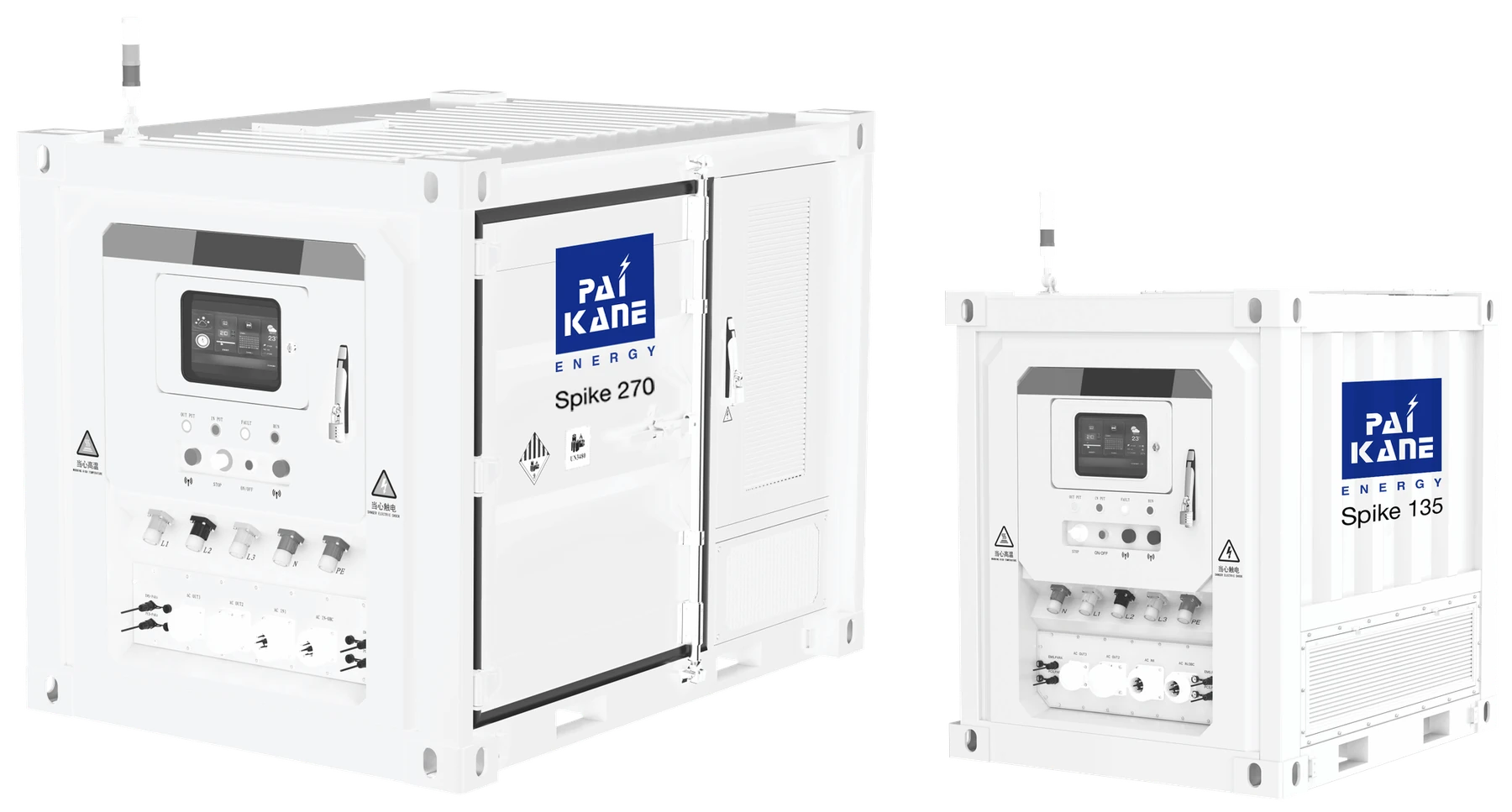
| Spike 135 | 135 kVA / 54 kWh |
| Spike 270 | 270 kVA / 108 kWh |
| Input | ≈ 25 A steady state |
| Max current | 231 A (Spike 135) · 462 A (Spike 270), 5 s |
| Paralleling | Not parallelizable; step up to Power |
| Recharge | Trickle via grid/DG; top-up overnight |
| Ingress | IP54 · C4 salt fog |

Serves crane peaks many times the supply current. The DG runs small, steady and efficient.
A Spike 270 supports a 130 t·m moment-class crane, delivering the transient peaks it demands from a small supply.
Indicative pairings across Liebherr and XMT classes from 4–5 T through 12–50 T. Final selection requires the equipment electrical schedule and a measured or validated load profile.
| Crane class | Solution |
|---|---|
| 4–5 T · 30–45 kW · 60–90 A | Spike 135 |
| 5–8 T · 45–75 kW · 90–150 A | Spike 135 |
| 8–10 T · 75–110 kW · 150–220 A | Spike 270 |
| 12–50 T · 110–160 kW · 220–320 A | Spike 270 |
| 32–90 T · 160–250 kW · 320–500 A | Power 250 × 2–3 |
The Spike acts as a power buffer between a weak grid or small DG and a crane or hoist that draws 10–15× the steady current during a lift, raising the load without a large diesel set. Three ways to deploy it:
1 · Peak buffer: lowest TCO, with a small DG or a weak/temporary grid for energy and the Spike for peaks.
2 · Battery-only: zero emission and silent, running on Power 300/500 units recharged between shifts.
3 · Conventional hybrid: minimum change to an existing 250 kVA DG fleet by adding a BESS of your choice.
USEApplications
Tower cranes · hoists · constrained grid connections · rental fleets
Every Spike deployment starts with the PKE dispatch study: data first, hardware last.